PUBLICATIONS

From methods to
new understanding.

Research on scientific agents, diffraction analysis, crystal learning, and materials discovery.

Google Scholar ↗

34 publications

A self-learning scientific agent for X-ray diffraction
arXiv preprint2026

A self-learning scientific agent for X-ray diffraction

Bin Cao*#, Huichi Zhou*, Runyu Yang, Jingsong Li, Shuchen Sun, Yan Song, Hanyu Gao, Zhongwei Yu, Tong-Yi Zhang#, Jun Wang#

* equal contribution · # corresponding author

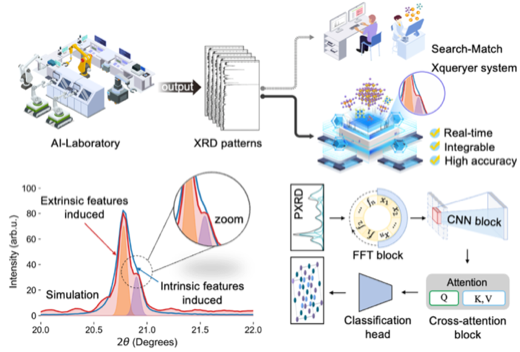
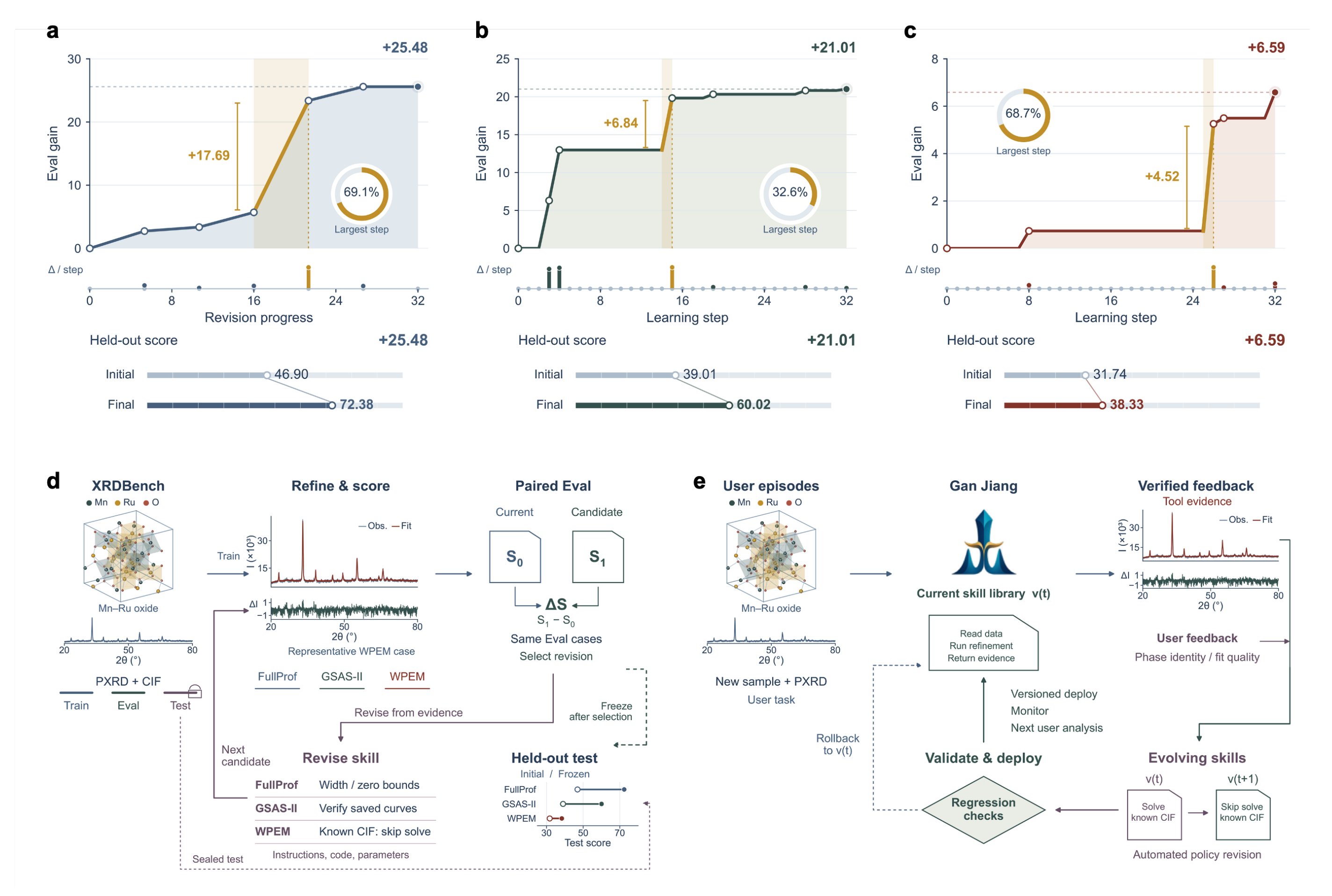
Ganjiang integrates XMatcher, XQueryer, XDecomposer, and WPEM to identify phases, separate mixtures, and refine structures from powder diffraction. It diagnoses failures and validates revised analytical skills before reuse, without retraining the language model. On DeltaXRDbench, it outperforms the evaluated methods for single- and multiphase identification on simulated and experimental data, linking physical evidence with expertise that transfers to new samples.

High-strength and ductile high-entropy alloy via expert-trajectory-guided processing
Research Square2026

High-strength and ductile high-entropy alloy via expert-trajectory-guided processing

Shuya Dong*, Bin Cao*, Jie Xiong#, Haoran Jiang, Mengwei He, Shuai Chen#, Tao Yang, Tong-Yi Zhang#

* equal contribution · # corresponding author

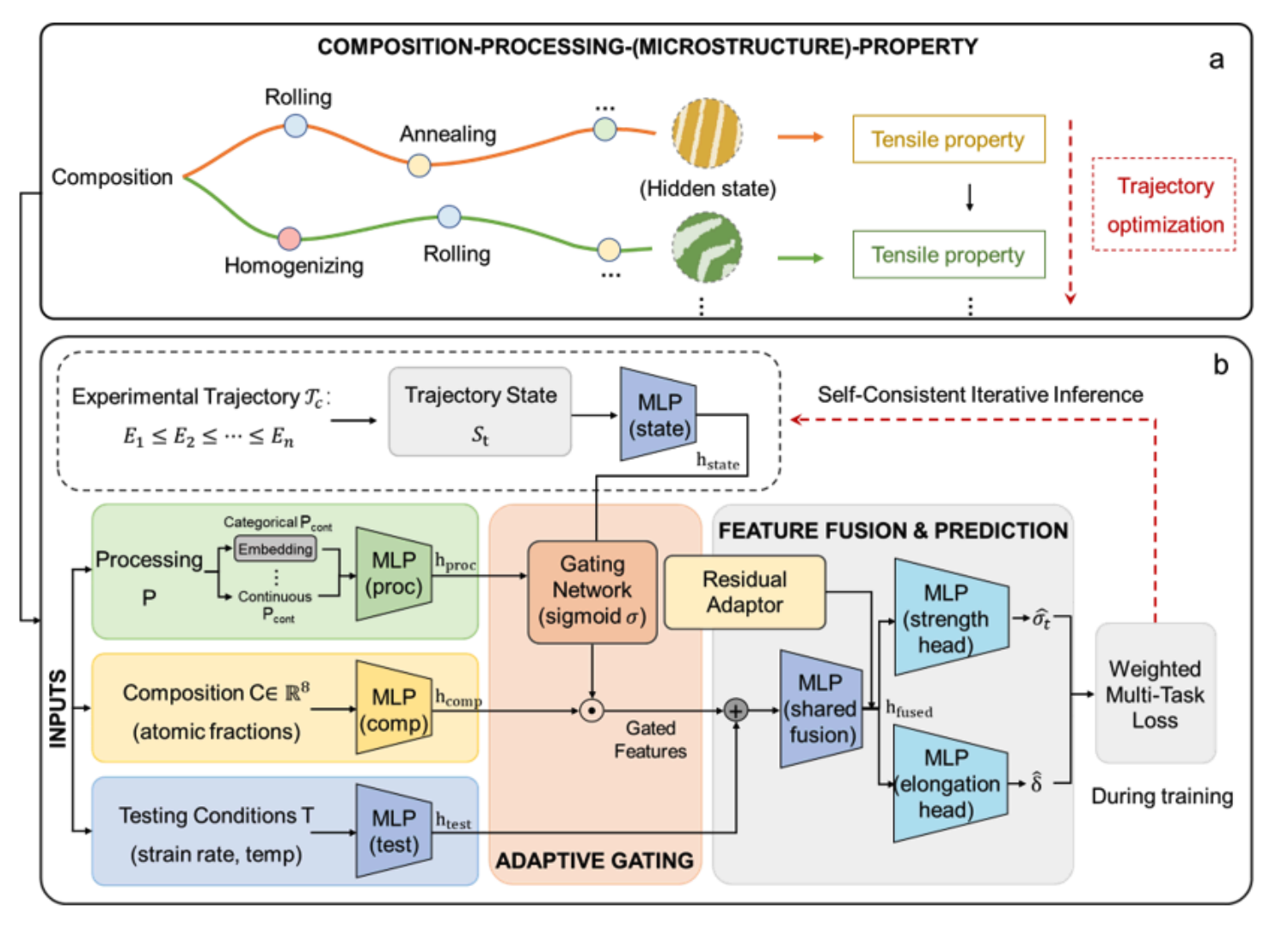
Overcoming the strength-ductility trade-off remains a central challenge in structural materials. Here we report an optimized thermomechanical-processing state of AlCoCrFeNi2.5 high-entropy alloy, identified with the assistance of an alloy trajectory optimization network. The optimized alloy exhibits an exceptional combination of a yield strength of 1.6 GPa, an ultimate tensile strength of 1.8 GPa, and a large fracture elongation of 20% at room temperature. At 650 oC, it retains a yield strength of 1.2 GPa, an ultimate tensile strength of 1.4 GPa, and a fracture elongation of 14%. The unprecedented mechanical properties originate from a unique heterogeneous microstructure consisting of spindle-shaped FCC domains, fine lamellar regions, and recrystallized dual-phase regions. This architecture enables cooperative deformation among ductile domains, strengthening lamellae and recrystallized dual-phase regions, thereby promoting appropriate strain partitioning, sustained work hardening and delayed damage localization. These results demonstrate that thermomechanical-processing optimization can transform the complex eutectic architecture into a mechanically cooperative microstructural state with superior strength, ductility, and intermediate-temperature resistance.

XMatcher: An Open-Source Framework for X-Ray Diffraction Phase Identification
Technical Report2026

XMatcher: An Open-Source Framework for X-Ray Diffraction Phase Identification

Cao Bin

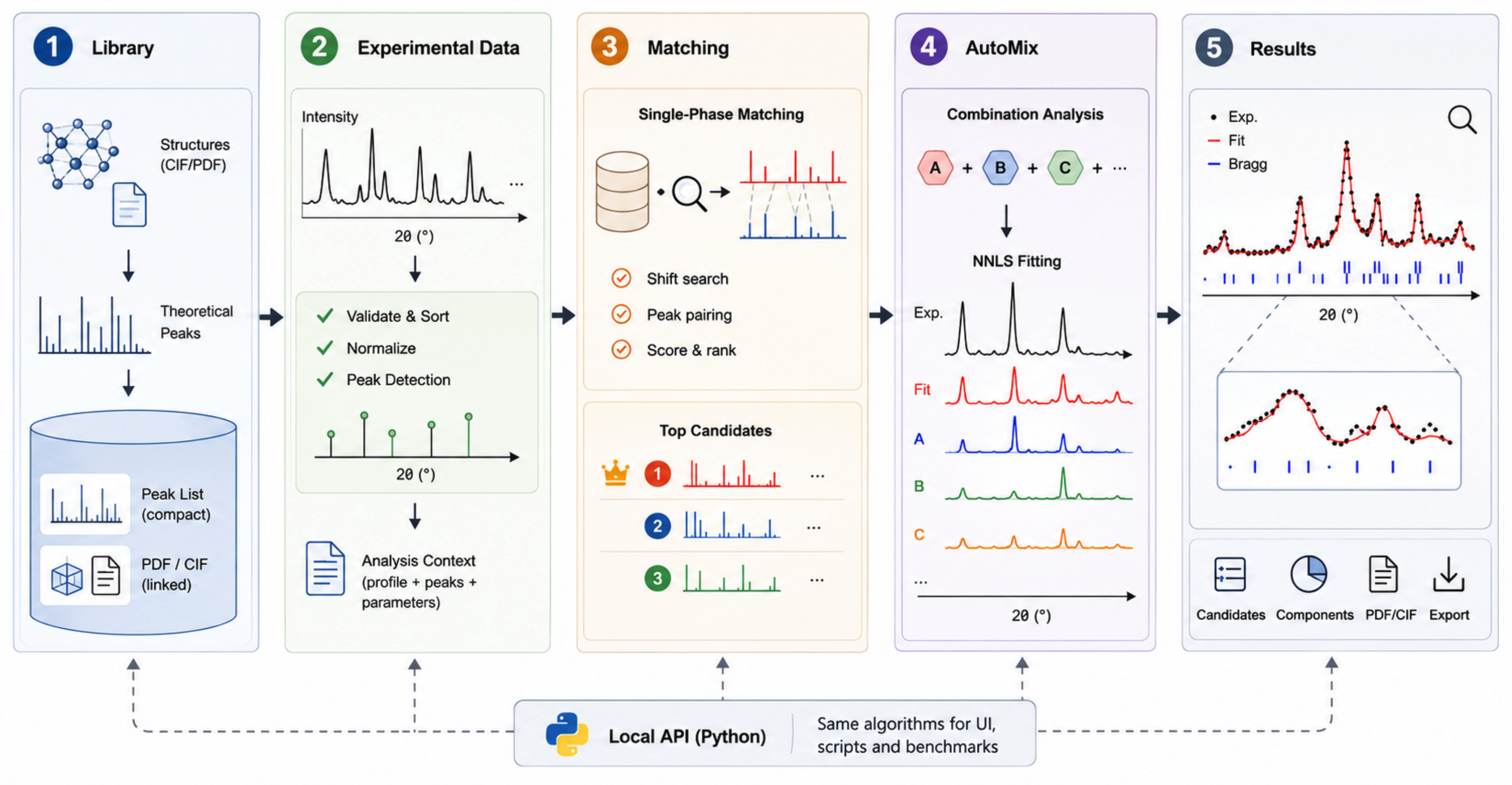
Powder X-ray diffraction (XRD) is widely used for crystalline phase identification, and recent machine learning approaches have demonstrated remarkable capabilities in accelerating diffraction interpretation. However, reliable phase assignment still requires transparent, evidence-based validation, particularly for complex samples where interpretability and expert assessment remain essential. Search-match methods provide a robust and complementary strategy, yet many implementations are proprietary, limiting accessibility and reproducibility. Here, we introduce XMatcher, an open-source, evidence-driven framework that integrates diffraction databases, matching algorithms, and interactive visualization into a portable workflow. XMatcher generates theoretical diffraction libraries from crystal structures, retrieves candidate phases through chemical and diffraction constraints, applies global angular-shift correction and one-to-one peak matching, and reports quantitative agreement metrics together with peak-level evidence. Its AutoMix module extends identification to multiphase patterns by evaluating candidate phase combinations, estimating non-negative diffraction contributions, and visualizing phase-specific peak distributions. Through a local graphical interface, XMatcher enables ranked candidate inspection, interactive pattern comparison, PDF/CIF-based whole-pattern validation, and reproducible analysis export. By exposing both supporting and conflicting evidence rather than relying on a single similarity score, XMatcher provides an interpretable and reproducible platform for crystalline phase identification.

SVGym (SciVerseGym): An Environment for Reinforcement Learning and Bayesian Optimization in Crystal Discovery
Technical Report2026

SVGym (SciVerseGym): An Environment for Reinforcement Learning and Bayesian Optimization in Crystal Discovery

Cao Bin

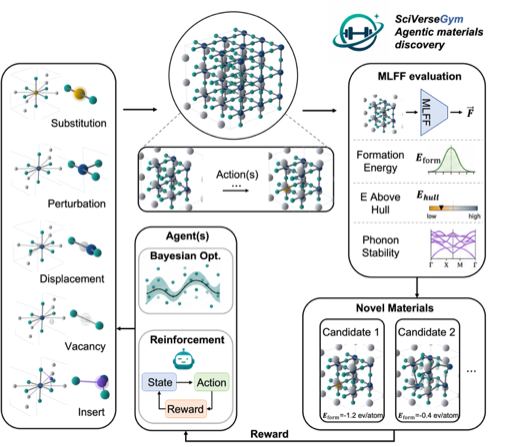
We introduce SciVerseGym, a Gymnasium-compatible environment for sequential crystal discovery that frames crystal design as a Markov decision process. Agents observe an atomistic structure, apply chemically meaningful edits, and receive feedback from a configurable evaluator. SciVerseGym supports local and global actions, including elemental substitution, lattice perturbation, atomic displacement, vacancy creation, and atom insertion, along with configurable chemical spaces, structure pools, atomistic and graph-based observations, custom rewards, optional relaxation, and stability or phonon-related diagnostics. Each step applies an edit, evaluates the candidate using a machine-learned interatomic potential or any ASE-compatible calculator, and returns the standard (obs, reward, terminated, truncated, info) tuple. By decoupling agent logic from materials infrastructure, SciVerseGym provides an open, reproducible, and extensible testbed for reinforcement learning, Bayesian optimization, evolutionary search, and language-agent workflows in closed-loop crystal discovery.

Research context

Machine-learned interatomic potentials now enable efficient atomistic evaluation for interactive materials discovery, yet closed-loop crystal search methods remain fragmented across bespoke pipelines for editing, relaxation, scoring, constraints, and bookkeeping.

We introduce SciVerseGym, a Gymnasium-compatible environment for sequential crystal discovery that frames crystal design as a Markov decision process. Agents observe an atomistic structure, apply chemically meaningful edits, and receive feedback from a configurable evaluator. SciVerseGym supports local and global actions, including elemental substitution, lattice perturbation, atomic displacement, vacancy creation, and atom insertion, along with configurable chemical spaces, structure pools, atomistic and graph-based observations, custom rewards, optional relaxation, and stability or phonon-related diagnostics. Each step applies an edit, evaluates the candidate using a machine-learned interatomic potential or any ASE-compatible calculator, and returns the standard (obs, reward, terminated, truncated, info) tuple. By decoupling agent logic from materials infrastructure, SciVerseGym provides an open, reproducible, and extensible testbed for reinforcement learning, Bayesian optimization, evolutionary search, and language-agent workflows in closed-loop crystal discovery.

Physics-Constrained Learning of Crystal Structures and Properties from Powder Diffraction
HKUST Thesis2026

Physics-Constrained Learning of Crystal Structures and Properties from Powder Diffraction

Cao Bin

This thesis develops a physics-constrained AI framework for crystal structure and property inference from powder X-ray diffraction (PXRD). By combining large-scale simulated and experimental datasets, physics-aware structure identification (XQueryer), whole-pattern refinement (WPEM), and diffraction-informed representation learning (PRDNet), the framework enables end-to-end, physically consistent interpretation of diffraction data, advancing autonomous materials characterization and AI-driven materials discovery.

XDecomposer: Learning Prior-Free Set Decomposition for Multiphase X-ray Diffraction
Neural Information Processing Systems (NeurIPS)2026Top AI conference

XDecomposer: Learning Prior-Free Set Decomposition for Multiphase X-ray Diffraction

Hanyu Gao*, Cao Bin*#, Yunyue Su, Tong-Yi Zhang, Qiang Liu#

* equal contribution · # corresponding author

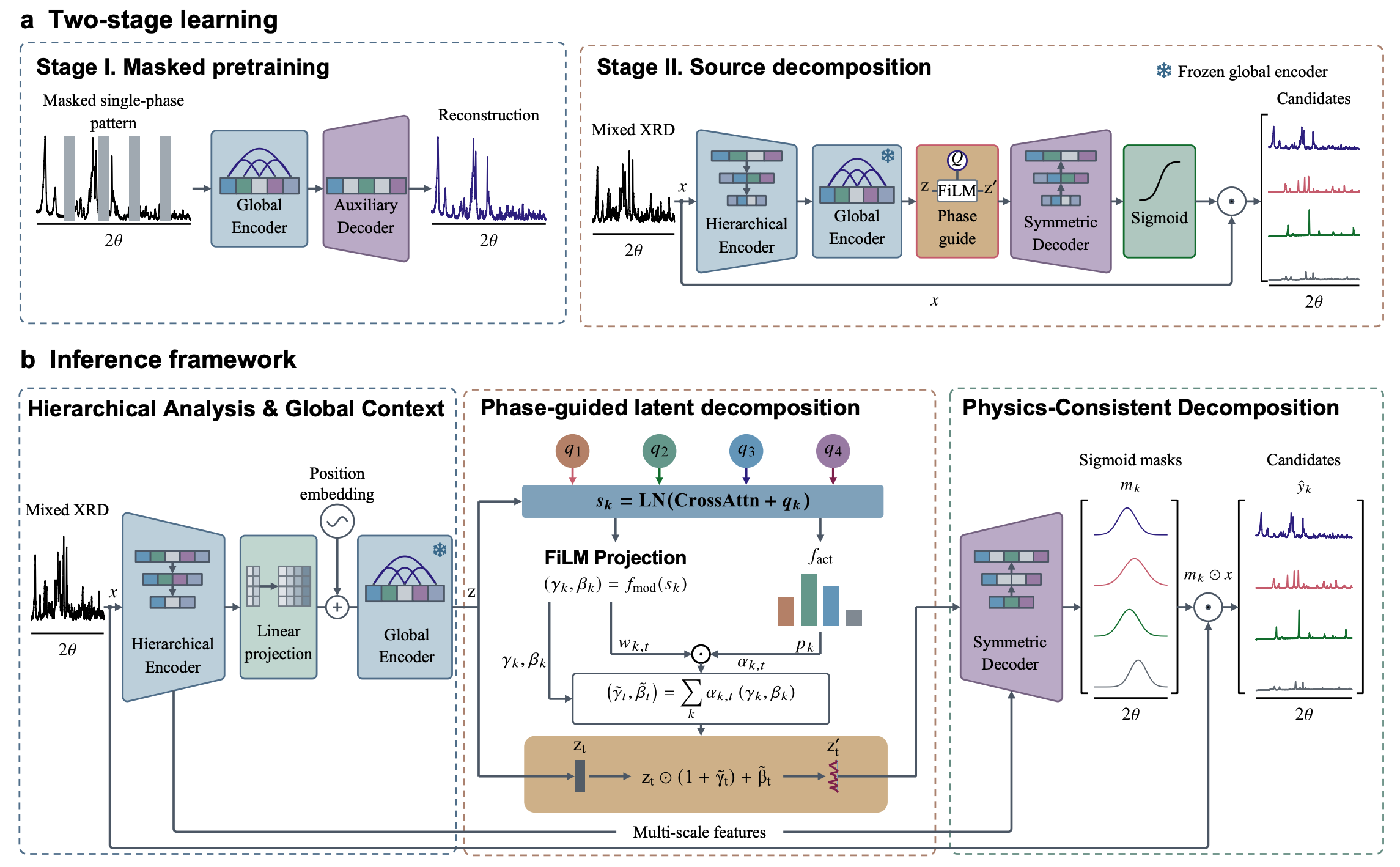
Multiphase powder X-ray diffraction (PXRD) analysis remains a fundamental bottleneck in structure identification, as real-world synthesis often produces complex mixtures whose constituent phases (components) cannot be reliably disentangled. While recent advances in representation-based crystal retrieval and generation suggest the possibility of inferring structures directly from PXRD, existing approaches largely assume single-phase inputs and break down in multiphase settings. Here, we present XDecomposer, a prior-free framework for joint decomposition and identification of multiphase XRD patterns without requiring candidate phase lists, structural templates, or prior knowledge of phase number. We formulate multiphase diffraction analysis as a set prediction problem, where the model infers an unordered set of phase-resolved components, their mixture proportions, and corresponding structural representations within a unified architecture. A phase-query-driven decomposition mechanism, together with diffraction-consistent physical reconstruction, enables accurate source separation while preserving crystallographic fidelity. Extensive experiments on both simulated and experimental datasets show that XDecomposer substantially improves reconstruction accuracy and phase identification across diverse chemical systems, while maintaining strong generalization to unseen mixtures. These results provide a practical route toward data-driven, source-resolved multiphase XRD analysis and reduce long-standing dependence on prior-guided iteratively phase matching.

Research context

Multiphase powder X-ray diffraction (PXRD) analysis remains a fundamental bottleneck in structure identification, as real-world synthesis often produces complex mixtures whose constituent phases (components) cannot be reliably disentangled. While recent advances in representation-based crystal retrieval and generation suggest the possibility of inferring structures directly from PXRD, existing approaches largely assume single-phase inputs and break down in multiphase settings. Here, we present XDecomposer, a prior-free framework for joint decomposition and identification of multiphase XRD patterns without requiring candidate phase lists, structural templates, or prior knowledge of phase number. We formulate multiphase diffraction analysis as a set prediction problem, where the model infers an unordered set of phase-resolved components, their mixture proportions, and corresponding structural representations within a unified architecture. A phase-query-driven decomposition mechanism, together with diffraction-consistent physical reconstruction, enables accurate source separation while preserving crystallographic fidelity. Extensive experiments on both simulated and experimental datasets show that XDecomposer substantially improves reconstruction accuracy and phase identification across diverse chemical systems, while maintaining strong generalization to unseen mixtures. These results provide a practical route toward data-driven, source-resolved multiphase XRD analysis and reduce long-standing dependence on prior-guided iteratively phase matching.

Efficient and Principled Scientific Discovery through Bayesian Optimization: A Tutorial
arXiv2026

Efficient and Principled Scientific Discovery through Bayesian Optimization: A Tutorial

Zhongwei Yu*, Rasul Tutunov*, Alexandre Max Maraval*, Zikai Xie*, Zhenzhi Tan*, Jiankang Wang*, Cao Bin*, Zijing Li, Liangliang Xu, Qi Yang#, Jun Jiang#, Sanzhong Luo#, Zhenxiao Guo#, Zhang Tongyi#, Haitham Bou-Ammar#, Jun Wang#

* equal contribution · # corresponding author

Traditional materials discovery relies on iterative hypothesis–experiment cycles, but it scales poorly with increasing complexity: problems with 5–15 design variables and costly, time-intensive experiments often allow exploration of less than 0.1% of the design space. This tutorial introduces Bayesian Optimization (BO) as a principled framework to accelerate discovery by using surrogate models, such as Gaussian processes, and acquisition functions to efficiently balance exploration and exploitation. We present the core components, practical workflows, and real-world applications of BO in areas like catalysis and molecular discovery, along with key extensions for realistic settings. Overall, this tutorial bridges theory and practice, enabling more efficient, informed, and scalable scientific discovery.
AI-Driven Structure Refinement of X-ray Diffraction
arXiv2026

AI-Driven Structure Refinement of X-ray Diffraction

Cao Bin, Zhang Qian, Feng Zhenjie, Zhang Taolue, Huang Jiaqiang, Weng Lu-Tao, Zhang Tongyi#

# corresponding author

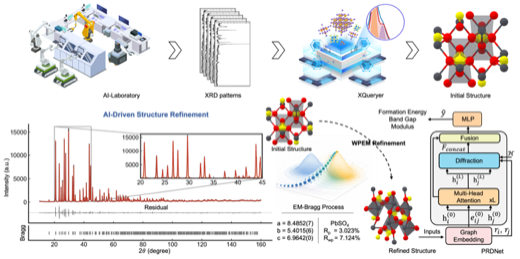
AI can quickly propose candidate phases from X-ray diffraction (XRD), but refinement often fails due to unstable intensities under peak overlap and weak diffraction constraints. We introduce WPEM, a physics-constrained whole-pattern decomposition workflow that embeds Bragg's law in a batch expectation–maximization framework. WPEM models the full profile as a probabilistic mixture, iteratively inferring component intensities while keeping peak centers Bragg-consistent, producing a stable, physically valid representation. On PbSO4 and Tb2BaCoO5, WPEM outperforms FullProf and TOPAS. It generalizes to multiphase Ti–15Nb films, NaCl–Li2CO3 mixtures, semicrystalline polymers, operando cathodes, disordered Ru–Mn oxides (CCDC 2530452), and ancient Egyptian make-up, bridging AI-generated hypotheses and diffraction-ready structure refinement.

Research context

We present WPEM, a physics-constrained workflow for X-ray diffraction (XRD) analysis that integrates Bragg’s law into a batch expectation–maximization framework. WPEM models full diffraction profiles as probabilistic mixtures, iteratively inferring component-resolved intensities while ensuring Bragg-consistent peak positions, producing stable, physically valid representations even under severe overlap or mixed phases. It outperforms standard packages on reference patterns and generalizes to complex experimental scenarios, including multiphase thin films, disordered oxides, semicrystalline polymers, operando cathodes, and historical samples. WPEM bridges AI-generated phase hypotheses with diffraction-ready structure refinement.

Bgolearn: a unified Bayesian optimization framework for accelerating materials discovery
npj Computational Materials2026

Bgolearn: a unified Bayesian optimization framework for accelerating materials discovery

Cao Bin, Xiong Jie#, Ma Jiaxuan, Tian Yuan, Hu Yirui, He Mengwei, Zhang Longhan, Wang Jiayu, Hui Jian#, Liu Li, Xue Dezhen, Turab Lookman#, Wang Jun#, Zhang Tongyi#

# corresponding author

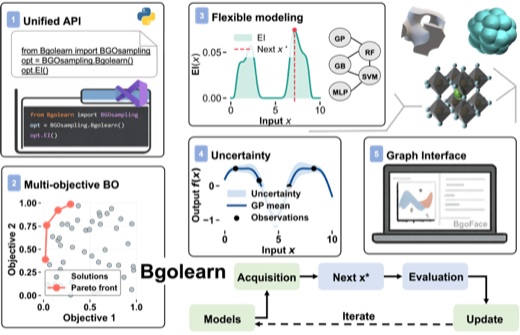
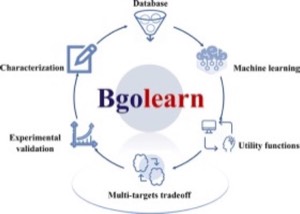
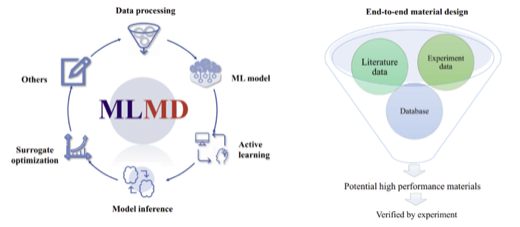
Efficient exploration of vast compositional and processing spaces is essential for accelerated materials discovery. Bayesian optimization (BO) provides a principled strategy for identifying optimal materials with minimal experiments, yet its adoption in materials science is hindered by implementation complexity and limited domain-specific tools. Here, we present Bgolearn, a comprehensive Python framework that makes BO accessible and practical for materials research through an intuitive interface, robust algorithms, and materials-oriented workflows.
Research context

In 2022, I open-sourced the Bgolearn framework (https://github.com/Bin-Cao/Bgolearn) and have since actively maintained and promoted it in collaboration with experimental researchers. My goal is to foster materials innovation through attachable and accessible machine learning tools.

In 2026, we published the paper Bgolearn: A Unified Bayesian Optimization Framework for Accelerating Materials Discovery in npj Computational Materials. This publication marks a major milestone, representing more than four years of Bgolearn's development, refinement, and real-world applications.

Bgolearn is a lightweight and extensible Python package for Bayesian global optimization, tailored for accelerating materials discovery and design. It supports both regression and classification tasks, includes a variety of acquisition strategies, and provides a seamless pipeline for virtual screening, active learning, and multi-objective optimization.

I’m truly glad to see several groundbreaking innovations in materials science enabled by the Bgolearn framework (Just list a representative subset):

2026
  1. Surfaces and Interfaces : Photochemical Synthesis of WS2 Thin Films. — Link
  2. JPhys Materials : Design of TaNbMoVW refractory high-entropy alloys. — Link
  3. Chemical Science : Optimzie on-surface reactions. — Link
  4. Springer Nature : Book chapter : Bayesian Global Optimization. — Link
  5. J. Mater. Inform. : Optimize the hyperparameters of the SciBERT — Link
  6. Science Bulletin : Discover ultra-durable and highly active catalysts — Link
  7. Aggregate: Discover G-Quadruplex Deep-Eutectic Circularly Polarized Luminescence Materials — Link
  8. Mater. Sci. Semicond. Process.: Substitutional Hf-Doped p-Type MoS2 via Pulsed-Laser Synthesis — Link
2025
  1. Nano Letters: Self-Driving Laboratory under UHV — Link
  2. Small: ML-Engineered Nanozyme System for Anti-Tumor Therapy — Link
  3. Computational Materials Science: Mg-Ca-Zn Alloy Optimization — Link
  4. Measurement: Foaming Agent Optimization in EPB Shield Construction — Link
  5. Intelligent Computing: Metasurface Design via Bayesian Learning — Link
2024
  1. Materials & Design: Lead-Free Solder Alloys via Active Learning — Link
  2. npj Computational Materials: MLMD Platform with Bgolearn Backend — Link
Beyond Structure: Invariant Crystal Property Prediction with Pseudo-Particle Ray Diffraction
International Conference on Learning Representations (ICLR)2026Top AI conference

Beyond Structure: Invariant Crystal Property Prediction with Pseudo-Particle Ray Diffraction

Cao Bin, Liu Yang#, Zhang Longhan, Wu Yifan, Luo Yuyu, Cheng Hong, Ren Yang#, Zhang Tongyi#

# corresponding author

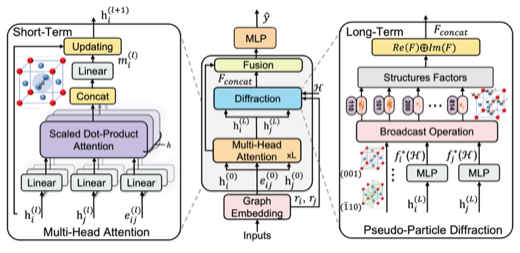
We propose PRDNet, a novel architecture that integrates graph embeddings with a learned pseudoparticle diffraction module. It generates synthetic diffraction patterns that are invariant to crystallographic symmetries. We extensively evaluate PRDNet on multiple large-scale benchmarks, including Materials Project, JARVIS-DFT, and MatBench. Our model achieves state-of-the-art performance across a wide range of crystal property prediction tasks, demonstrating its effectiveness.

Research context

Crystal property prediction, governed by quantum mechanical principles, is computationally prohibitive to solve exactly for large many-body systems using traditional density functional theory. While machine learning models have emerged as efficient approximations for large-scale applications, their performance is strongly influenced by the choice of atomic representation.

We introduce PRDNet that leverages unique reciprocal-space diffraction besides graph representations. To enhance sensitivity to elemental and environmental variations, we employ a data-driven pseudo-particle to generate a synthetic diffraction pattern. PRDNet ensures full invariance to crystallographic symmetries.

Spatial-adaptive active learning identifies ultra-durable and highly active catalysts for acidic oxygen evolution reaction
Science Bulletin2026

Spatial-adaptive active learning identifies ultra-durable and highly active catalysts for acidic oxygen evolution reaction

Cao Bin*, Qin Yin*#, Luo Yan*, Ying Zhehan, Yan Zilin, Weng Tu-Tao, Li Kaikai#, Zhang Tongyi#

* equal contribution · # corresponding author

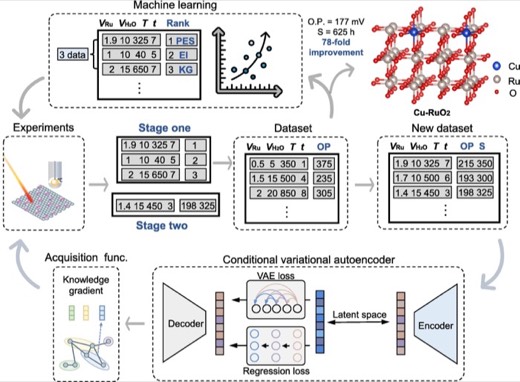
Here, we present a spatially adaptive active-learning framework with closed-loop experimentation for targeted catalyst optimization. Bayesian optimization and a conditional variational autoencoder first identify a low-overpotential stability subspace, followed by active learning to pinpoint the most stable candidate. This strategy leads to the discovery of a Cu–RuO₂ catalyst with outstanding durability (625 h) and a low overpotential of 177 mV at 10 mA cm⁻². Our results highlight an efficient AI-driven pathway for accelerating the design of stable acidic OER catalysts.

Research context

We present a spatially adaptive active-learning framework with closed-loop experimentation for targeted catalyst optimization. Bayesian optimization and a conditional variational autoencoder first identify a low-overpotential stability subspace, followed by active learning to pinpoint the most stable candidate.

This strategy leads to the discovery of a Cu–RuO₂ catalyst with outstanding durability (625 h) and a low overpotential of 177 mV at 10 mA cm−2. Our results highlight an efficient AI-driven pathway for accelerating the design of stable acidic OER catalysts.

Ferromagnetic Surface Segregation via Stress-Concentration Coupling Boosts the Oxygen Evolution Reaction in RuO2
ACS Nano2025

Ferromagnetic Surface Segregation via Stress-Concentration Coupling Boosts the Oxygen Evolution Reaction in RuO2

Qin Yin*, Deng Sihao*, Zhou Xiaoye#, Cao Bin, Ying Zhehan, Yan Zilin, Zhong Zheng, He Lunhua#, Li Kaikai#, Zhang Tongyi#

* equal contribution · # corresponding author

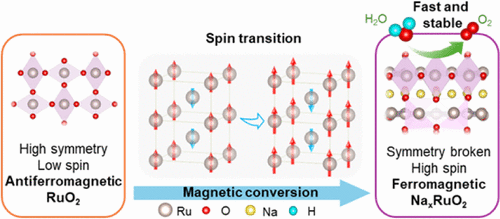
In this study, we successfully induced weak ferromagnetism in commercial RuO2, transitioning it from an AFM state using an electrochemical sodiation method. This process resulted in high activity, achieving an overpotential of 145 mV to reach 10 mA cm–2 and extending the service hours by more than 13 times compared to pristine RuO2 in 0.5 M H2SO4.

Dissecting the chemical strain in inactive components of sodium-ion battery cathodes
Scripta Materialia2025

Dissecting the chemical strain in inactive components of sodium-ion battery cathodes

Shi Xiuling*, Zhu Jiaqi*, Chen Bingxu, Cao Bin, Lv Bingfeng, Wang Zihan, Sun Sheng, Li Kaikai#, Zhang Tongyi#

* equal contribution · # corresponding author

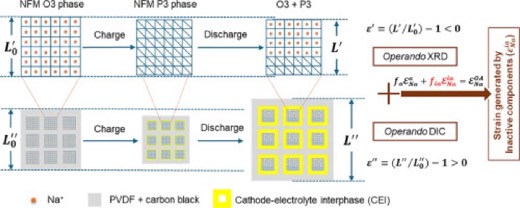
This work takes NaNi1/3Fe1/3Mn1/3O2 (NFM) as a model cathode and dissects the chemical strain in inactive components by combining operando XRD and digital image correlation techniques to simultaneously measure the chemically induced phase transformation strain and overall strain. Results reveal considerable negative strain during initial charge and positive strain after discharge, and the positive residual strain accumulates over cycles.

First-Order Phase Transformation in Highly Concentrated Electrolyte for High-Rate and Long-Cycle Aqueous Zn-Ion Battery
Angewandte Chemie2025

First-Order Phase Transformation in Highly Concentrated Electrolyte for High-Rate and Long-Cycle Aqueous Zn-Ion Battery

Shi Xiuling#, Sun Yuchuan, Cao Bin, Zhou Xiaoye, Lei Tongxing, Li Jiahui, Ding Zhiyu, Fang Kai, Wu Junwei, Huang Yan#, Li Kaikai#, Zhang Tongyi#

# corresponding author

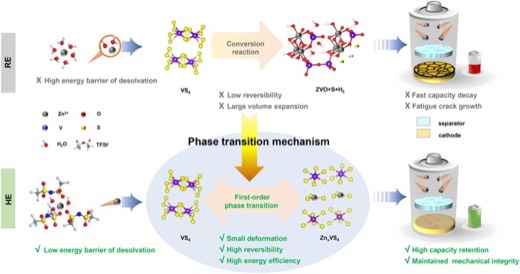
As a result, capacity doubles and cycle life increase sixty-fold compared to regular dilute electrolyte. The first-order phase transformation is attributed to reduced de-solvation energy and charge transfer energy barrier due to different Zn2+ solvation structure in the concentrated electrolyte. Our findings offer groundbreaking insights into the microstructure evolution of electrode in concentrated electrolyte and pave the way to further develop batteries with excellent performance.

XQueryer: an intelligent crystal structure identifier for powder X-ray diffraction
National Science Review2025

XQueryer: an intelligent crystal structure identifier for powder X-ray diffraction

Cao Bin, Zheng Zinan, Liu Yang, Zhang Longhan, Wong W-Y Lawrence, Weng Tu-Tao, Li Jia#, Li Haoxiang#, Zhang Tongyi#

# corresponding author

We developed XQueryer, an intelligent agent for simulating, recognizing, and analyzing powder X-ray diffraction (PXRD) patterns. Trained on over two million high-fidelity simulated spectra, XQueryer achieves significantly higher accuracy—28.9% better than existing AI models and traditional methods. Integrated with a powder diffractometer, it enables real-time structural analysis of crystal samples.

Research context

We developed XQueryer, an intelligent agent for simulating, recognizing, and analyzing powder X-ray diffraction (PXRD) patterns. Trained on over two million high-fidelity simulated spectra, XQueryer achieves significantly higher accuracy—28.9% better than existing AI models and traditional methods. Integrated with a powder diffractometer, it enables real-time structural analysis of crystal samples.

A freely accessible online platform is available at https://xqueryer.caobin.asia/

Optimize the quantum yield of G‐quartet‐based circularly polarized luminescence materials via active learning strategy‐BgoFace
MGE advances2025

Optimize the quantum yield of G‐quartet‐based circularly polarized luminescence materials via active learning strategy‐BgoFace

Li Tianliang*, Chen Lifei*, Cao Bin*, Liu Siyuan, Lin Lixing, Li Zeyu, Chen Yingying, Li Zhenzhen, Zhang Tongyi#, Feng Linyan#

* equal contribution · # corresponding author

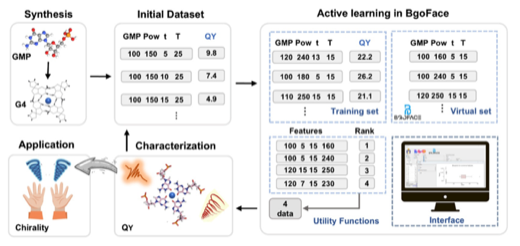
This work developed an integrated AL software, BgoFace, which satisfies most material property optimization re-quirements. The application of BgoFace (with default setting) successfully accel-erated the discovery of G4-based CPL materials, achievingresults within six iterations and synthesizing 24 experimentalgroups. The final QY nearly doubled the initial best QY inthe training dataset.

Research context

In 2025, I led the development of the user interface software for Bgolearn, called BgoFace, published in MGR Advances. BgoFace is a user-friendly platform designed to accelerate materials innovation through active learning. It streamlines Bayesian global optimization by tackling key challenges such as experimental–computational interoperability and algorithm accessibility. With its intuitive interface and built-in support for experimental constraints, BgoFace enables efficient materials discovery without requiring deep machine learning expertise.

Using default settings and simple button clicks, BgoFace guided six iterations of optimization, recommending four infill points per iteration via four different utility functions—for a total of 24 suggestions. The optimal sample, with a highest QY of 37.25%, was discovered in the fifth iteration—nearly doubling the initial value. The software and source code are openly available at https://github.com/Bgolearn/BgoFace.

Materials Generation in the Era of Artificial Intelligence: A Comprehensive Survey
arXiv2025

Materials Generation in the Era of Artificial Intelligence: A Comprehensive Survey

Li Zhixun*, Cao Bin*, Jiao Rui*, Wang Liang*, Wang Ding, Liu Yang, Chen Dingshuo, Li Jia, Liu Yu, Wang Liang, Zhang Tongyi, Yu Xu Jeffrey

* equal contribution

We first organize various types of materials and illustrate multiple representations of crystalline materials. We then provide a detailed summary and taxonomy of current AI-driven materials generation approaches. Furthermore, we discuss the common evaluation metrics and summarize open-source codes and benchmark datasets. Finally, we conclude with potential future directions and challenges in this fast-growing field.

Research context

Materials discovery is a fundamental driver of technological advancement with direct impact on real-world challenges. From energy systems and electronics to biomedical devices and sustainable manufacturing, novel materials enable new functionalities and improved performance.

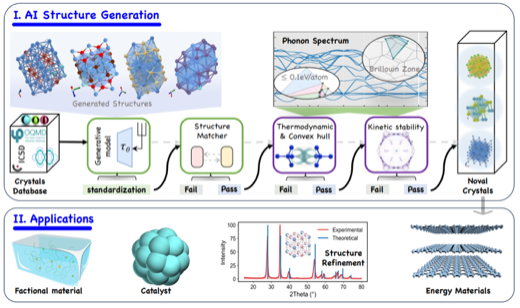
Our survey offers a detailed and comprehensive overview of material representations, particularly focusing on crystal structures and their precise mathematical definitions. We systematically categorize and compare a wide range of existing techniques, supported by a clear development timeline. To facilitate research and practical application, we provide abundant resources, including links to open-source code and datasets. Additionally, we highlight current challenges and propose future research directions to inspire continued innovation in the field.

Interpretable Active Learning Identifies Iron-Doped Carbon Dots With High Photothermal Conversion Efficiency for Antitumor Synergistic Therapy
Aggregate2025

Interpretable Active Learning Identifies Iron-Doped Carbon Dots With High Photothermal Conversion Efficiency for Antitumor Synergistic Therapy

Li Tianliang*, Cao Bin*, Wang Yitong, Lin Lixing, Chen Lifei, Su Tianhao, Song Haicheng, Ren Yuze, Zhang Longhan, Chen Yingying, Li Zhenzhen, Feng Linyan#, Zhang Tongyi#

* equal contribution · # corresponding author

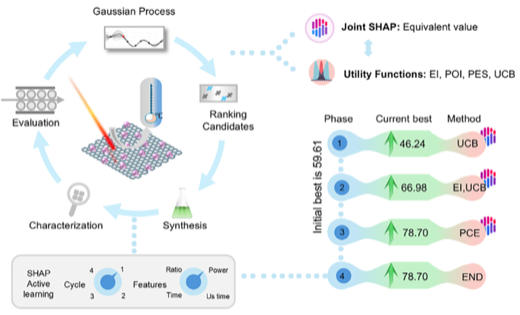
We apply an interpretable AL strategy to efficiently optimize the photothermal conversion efficiency (PCE) of carbon dots (CDs) in photothermal therapy (PTT). Using this approach, we successfully synthesized irondoped CDs (Fe-CDs) with PCE exceeding 78.7% after only 16 experimental trials over four iterations.

opXRD: Open Experimental Powder X-Ray DiffractionDatabase
Advanced Intelligent Discovery2025

opXRD: Open Experimental Powder X-Ray DiffractionDatabase

Daniel Hollarek, Henrik Schopmans, Jona Östreicher, Jonas Teufel, Cao Bin, ..., Zhang Tongyi, Pascal Friederich#

# corresponding author

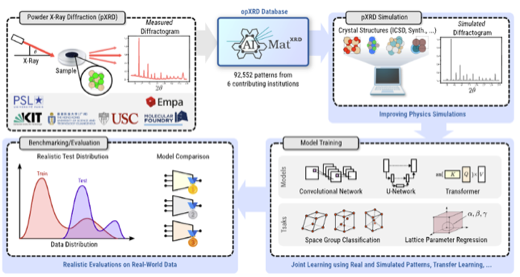
With the Open Experimental Powder X-ray Diffraction Database (opXRD), we providean openly available and easily accessible dataset of labeled and unlabeled experimental powder diffractograms. Labeled opXRDdata can be used to evaluate the performance of models on experimental data and unlabeled opXRD data can help improve theperformance of models on experimental data, for example, through transfer learning methods. We collected 92,552 diffractograms,2179 of them labeled, from a wide spectrum of material classes. We hope this ongoing effort can guide machine learning researchtoward fully automated analysis of pXRD data and thus enable future self-driving materials labs.

Research context

A notable difficulty in applying machine learning to this domain is the lack of sufficiently sized experimental datasets, which has constrained researchers to train primarily on simulated data. However, models trained on simulated pXRD patterns showed limited generalization to experimental patterns, particularly for low-quality experimental patterns with high noise levels and elevated backgrounds.

With the Open Experimental Powder X-Ray Diffraction Database (opXRD), we provide an openly available and easily accessible dataset of labeled and unlabeled experimental powder diffractograms. Labeled opXRD data can be used to evaluate the performance of models on experimental data and unlabeled opXRD data can help improve the performance of models on experimental data, e.g. through transfer learning methods. We collected 92552 diffractograms, 2179 of them labeled, from a wide spectrum of materials classes.

SimXRD-4M: Big Simulated X-ray Diffraction Data and Crystal Symmetry Classification Benchmark
International Conference on Learning Representations (ICLR)2025Top AI conference

SimXRD-4M: Big Simulated X-ray Diffraction Data and Crystal Symmetry Classification Benchmark

Cao Bin*, Liu Yang*, Zheng Zinan*, Tan Ruifeng, Li Jia#, Zhang Tongyi#

* equal contribution · # corresponding author

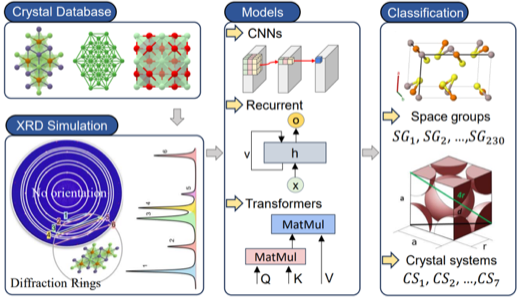
We developed a novel XRD simulation method that incorporates comprehensive physical interactions, resulting in a high-fidelity database. SimXRD comprises 4,065,346 simulated powder XRD patterns, representing 119,569 unique crystal structures under 33 simulated conditions that reflect real-world variations. We benchmark 21 sequence models in both in-library and out-of-library scenarios and analyze the impact of class imbalance in longtailed crystal label distributions. Remarkably, we find that: (1) current neural networks struggle with classifying low-frequency crystals, particularly in out-oflibrary situations; (2) models trained on SimXRD can generalize to real experimental data.

Research context

Powder X-ray diffraction (XRD) patterns are highly effective for crystal identification and play a pivotal role in materials discovery. While machine learning (ML) has advanced the analysis of powder XRD patterns, progress has been constrained by the limited availability of training data and established benchmarks. To address this, we introduce SimXRD, the largest open-source simulated XRD pattern dataset to date, aimed at accelerating the development of crystallographic informatics.
We developed a novel XRD simulation method that incorporates comprehensive physical interactions, resulting in a high-fidelity database. SimXRD comprises 4,065,346 simulated powder XRD patterns, representing 119,569 unique crystal structures under 33 simulated conditions that reflect real-world variations. We benchmark 21 sequence models in both in-library and out-of-library scenarios and analyze the impact of class imbalance in long-tailed crystal label distributions.

Enhancing the performance of Li-rich oxide cathodes through multifunctional surface engineering
Journal of Power Sources2025

Enhancing the performance of Li-rich oxide cathodes through multifunctional surface engineering

Lei Tongxing, Cao Guolin, Shi Xiuling, Cao Bin, Ding Zhiyu, Bai Yu, Wu Junwei#, Li Kaikai#, Zhang Tongyi#

# corresponding author

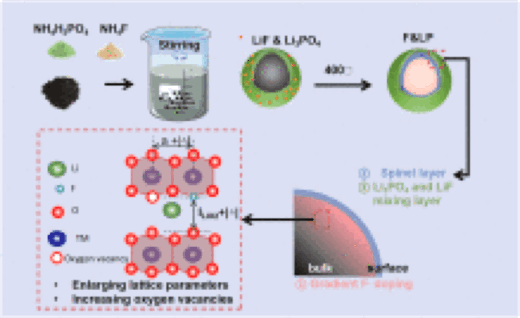
Herein, a multifunctional surface engineering is successfully applied to improve Li1.2Mn0.54Co0.13Ni0.13O2 materials by a facile method of solution pretreatment followed by high-temperature thermal treatment. Gradient fluorine doping on the near-surface region is demonstrated to induce the higher ratio of Mn3+/Mn4+, the increasing amounts of oxygen vacancies and the decreasing Li+ diffusion energy barrier.

Machine Learning-Engineered Nanozyme System for Synergistic Anti-Tumor Ferroptosis/Apoptosis Therapy
Small2024

Machine Learning-Engineered Nanozyme System for Synergistic Anti-Tumor Ferroptosis/Apoptosis Therapy

Li Tianliang*, Cao Bin*, Su Tianhao*, Lin Lixing, Wang Dong, Liu Xinting, Wan haoyu, Ji Haiwei, He Zixuan, Chen Yingying, Feng Lingyan#, Zhang Tongyi

* equal contribution · # corresponding author

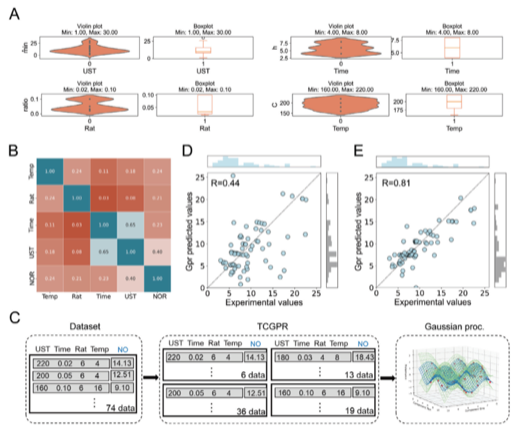
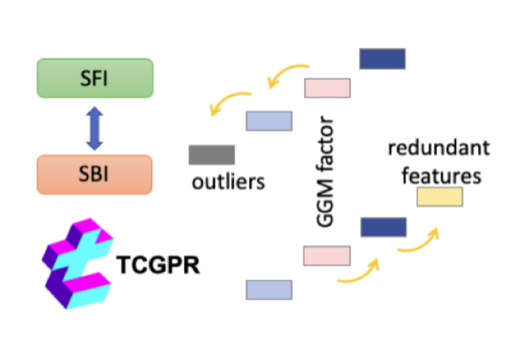
A novel ML model, termed the sequential backward Tree-Classifier for Gaussian Process Regression (TCGPR), is proposed to improve data pattern recognition following the divide-and-conquer principle.

A universal strategy towards high-rate and ultralong-life of Li‐rich Mn‐based cathode materials
Journal of Power Sources2024

A universal strategy towards high-rate and ultralong-life of Li‐rich Mn‐based cathode materials

Fu Wenbo, Lei Tongxing, Cao Bin, Shi Xiuling, Zhang Qi, Ding Zhiyu, Chen Lina#, Wu Junwei#

# corresponding author

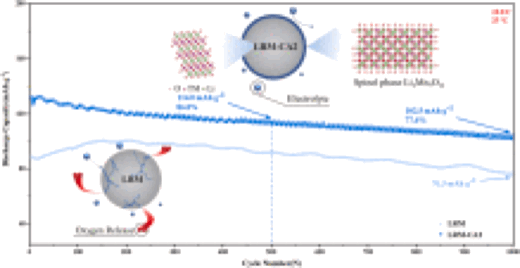
we employed a simple citric acid treatment (CA-treatment) method to fabricate the Li-rich spinel coating layer on LRMs. This in situ formed spinel Li4Mn5O12 layer successfully suppresses the oxygen release, provides three-dimensional (3D) lithium-ion diffusion channels and enriches Li embedding sites, resulting in a substantial improvement in the rate capability and high-rate cycling performance.

CGWGAN: crystal generative framework based on Wyckoff generative adversarial network
journal of material informatics2024

CGWGAN: crystal generative framework based on Wyckoff generative adversarial network

Su Tianhao*, Cao Bin*, Hu Shunbo, Li Musen, Zhang Tongyi#

* equal contribution · # corresponding author

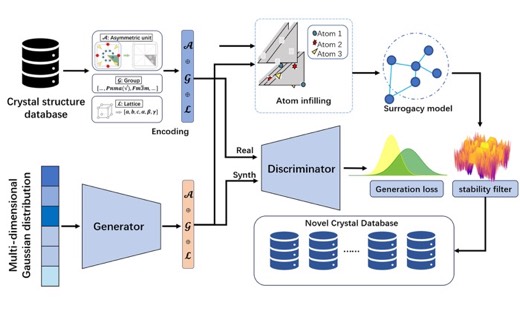
In this work, we present a crystal generative framework based on Wyckoff generative adversarial network (CGWGAN) to efficiently discover novel crystals.

Research context

In this work, we present a crystal generative framework based on Wyckoff generative adversarial network (CGWGAN) to efficiently discover novel crystals.

The CGWGAN includes three modules: a generator of crystal templates, an atom-infill module, and a crystal screening module. The generator uses a generative adversarial network (GAN) to produce crystal templates embedded with asymmetry units (ASUs), space groups, lattice vectors, and the total number of atoms within the lattice cell, ensuring that the generated templates precisely match all requirements of crystals. These templates become crystal candidates after filling in atoms of different chemical elements. These candidates are screened by M3GNet and the passed ones are subjected to density functional theory (DFT)-based calculations to finally verify their stability. As a showcase, the CGWGAN successfully discovers seven novel crystals within the Ba-Ru-O system, demonstrating its effectiveness. This work provides a knowledge-guided Artificial Intelligence generative framework for accelerating crystal discovery.
A Li-rich layered oxide cathode with remarkable capacity and prolonged cycle life
Chemical Engineering Journal2024

A Li-rich layered oxide cathode with remarkable capacity and prolonged cycle life

Lei Tongxing, Cao Bin, Fu Wenbo, Shi Xiuling, Ding Zhiyu, Zhang Qi, Wu Junwei#, Li Kaikai#, Zhang Tongyi#

# corresponding author

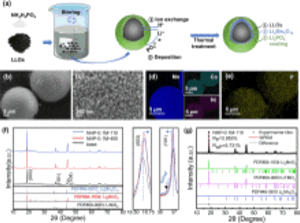
Introducing a facile ion-exchange method coupled with low-temperature thermal treatment, we have developed a strategy to enhance the cycling performance of Lithium-rich manganese-based layered oxides (LLOs).

MLMD: a programming-free AI platform to predict and design materials
npj Computational Materials2024

MLMD: a programming-free AI platform to predict and design materials

Ma Jiaxuan*, Cao Bin*, Dong Shuya, Tian Yuan, Wang Menghuan, Xiong Jie#, Sun Sheng#

* equal contribution · # corresponding author

We developed MLMD, an AI platform for materials design. It is capable of effectively discovering novel materials with high-potential advanced properties end-to-end, utilizing model inference, surrogate optimization, and even working in situations of data scarcity based on active learning.

Divide and conquer: Machine learning accelerated design of lead-free solder alloys with high strength and high ductility
npj Computational Materials2023

Divide and conquer: Machine learning accelerated design of lead-free solder alloys with high strength and high ductility

Wei Qinghua*, Cao Bin*, Yuan Hao*, Chen Youyang, You Kangdong, Yv Shuting, Yang Tixin, Dong Ziqiang#, Zhang Tongyi#

* equal contribution · # corresponding author

In general, small in size and big in noise, while the design space is huge, by a newly developed data preprocessing algorithm, named the Tree-Classifier for Gaussian Process Regression (TCGPR)….

Orthorhombic (Ru, Mn)2O3: A superior electrocatalyst for acidic oxygen evolution reaction
Nano Energy2023

Orthorhombic (Ru, Mn)2O3: A superior electrocatalyst for acidic oxygen evolution reaction

Qin Yin, Cao Bin, Zhou Xiaoye#, Xiao Zhuorui, Zhou Hanxiang, Zhao Zhenyi, Weng Yibo, Lv Jianshuai, Liu Yang, He Yan-Bing, Kang Feiyu, Li Kaikai#, Zhang Tongyi#

# corresponding author

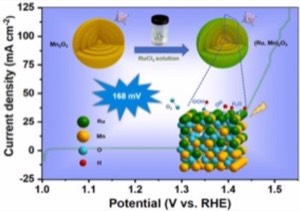
The present work, for the first time, successfully synthesizes orthorhombic (Ru, Mn)2O3 electrocatalyst through cation exchange. The orthorhombic (Ru, Mn)2O3 particles exhibit the outstanding electrocatalysis performance as OER electrocatalyst, showing an ultralow overpotential of 168 mV at 10 mA cm−2 in acidic water and good stability in 40 h of OER.

Discovering a formula for the high temperature oxidation behavior of FeCrAlCoNi based high entropy alloys by domain knowledge-guided machine learning
Journal of Materials Science & Technology2023

Discovering a formula for the high temperature oxidation behavior of FeCrAlCoNi based high entropy alloys by domain knowledge-guided machine learning

Wei Qinghua, Cao Bin, Deng Lucheng, Sun Ankang, Dong Ziqiang#, Zhang Tongyi#

# corresponding author

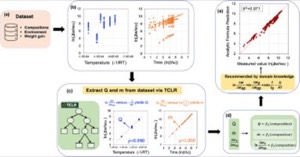
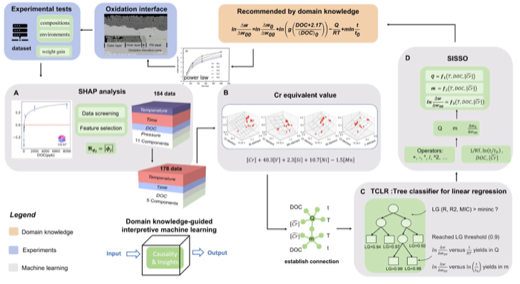
The Tree-Classifier for Linear Regression (TCLR) algorithm utilizes the two experimental features of exposure time (t) and temperature (T) to extract the spectrums of activation energy (Q) and time exponent (m) from the complex and high dimensional feature space, which automatically gives the spectrum of pre-factor. The three spectrums are assembled by using the element features, which leads to a general and interpretive formula with high prediction accuracy of the determination coefficient =0.971.